-min.png "kartikheater")
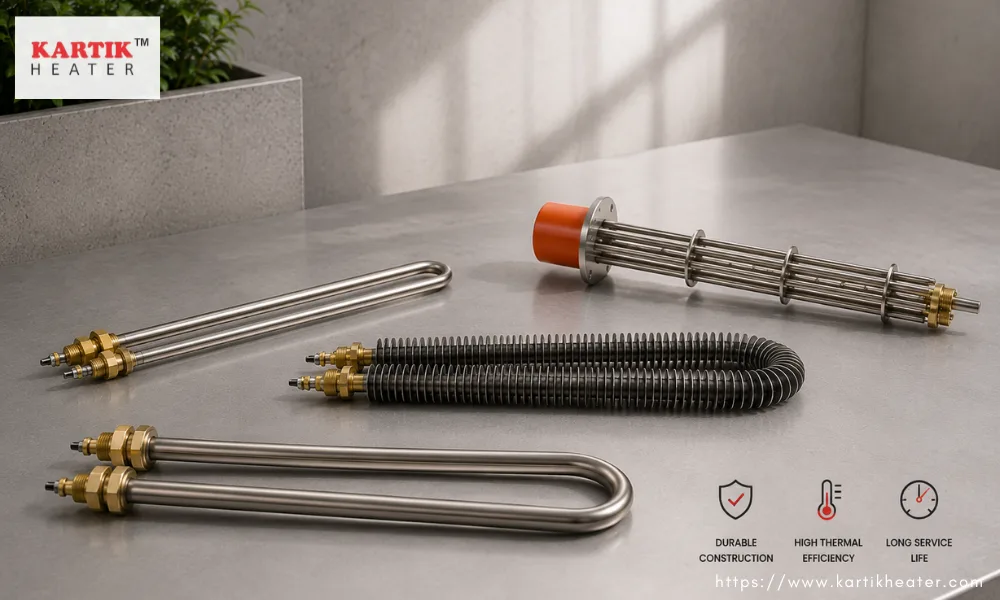
Industrial heating systems play a critical role in maintaining production efficiency, product quality, and process consistency across manufacturing industries. Whether heating air, liquids, molds, tanks, ducts, or machinery, the performance of the heating element directly affects operational reliability and energy consumption. This is why industrial tubular heater design is one of the most important considerations when selecting heating equipment for demanding industrial environments.
A well-engineered tubular heater is more than just an electrical heating component. Its design incorporates material selection, watt density, sheath construction, insulation quality, bending configuration, and terminal protection to deliver reliable thermal performance under continuous operating conditions.
Modern industries increasingly require industrial heating solutions that are customized to specific process requirements rather than relying solely on standard heater configurations. Understanding the common design features of high-performance tubular heaters helps engineers, procurement managers, and industrial buyers make informed purchasing decisions while improving equipment reliability and reducing maintenance costs.
What is Industrial Tubular Heater Design?
Industrial tubular heater design refers to the engineering and construction of a tubular heating element that delivers efficient heat transfer, long service life, and dependable performance in industrial applications.
A typical electric tubular heater consists of:
-
A resistance heating wire
-
High-purity magnesium oxide insulation
-
A protective metal sheath
-
Terminal connections
-
Mounting accessories when required
The combination of these components determines the heater\'s thermal efficiency, durability, operating temperature, and compatibility with different industrial environments.
Depending on the application, manufacturers may produce straight, bent, circular, spiral, or specially shaped heaters to suit various installation requirements.
How Does an Industrial Tubular Heater Work?
An electric heating element converts electrical energy into heat through resistance wire enclosed within a metal sheath. The resistance wire is insulated using compacted magnesium oxide powder, which provides excellent electrical insulation while efficiently transferring heat to the sheath.
The generated heat is transferred to:
-
Air
-
Water
-
Oils
-
Chemicals
-
Metal surfaces
-
Industrial machinery
The effectiveness of the industrial tubular heater design depends on factors such as sheath material, watt density, heater geometry, operating temperature, and the heating medium.
Common Design Features of High-Performance Industrial Tubular Heaters
High-Quality Sheath Materials
The outer sheath protects the heater from corrosion, oxidation, vibration, and mechanical damage. Material selection depends on the operating environment.
A stainless steel tubular heater is widely used because it offers:
-
Excellent corrosion resistance
-
Good thermal conductivity
-
Long operating life
-
Compatibility with moisture and many industrial chemicals
For high-temperature applications, specialized alloys may also be selected depending on process requirements.
Optimized Watt Density
Watt density determines how much heat is generated per unit surface area.
Properly engineered high performance tubular heater designs maintain an appropriate watt density to:
-
Prevent overheating
-
Improve heater life
-
Deliver stable process temperatures
-
Increase heating efficiency
Applications requiring rapid heating may use a high temperature tubular heater with carefully engineered watt density while ensuring safe operation.
High-Purity Magnesium Oxide Insulation
The insulation material inside the heater significantly affects electrical safety and heat transfer performance.
High-quality magnesium oxide provides:
-
Excellent electrical insulation
-
Efficient thermal conductivity
-
Moisture resistance
-
Improved mechanical stability
This design feature contributes to consistent long-term heater performance.
Precision Bending and Forming
One major advantage of a custom tubular heater is the ability to manufacture heaters in virtually any required configuration.
Common designs include:
-
U-shape
-
M-shape
-
Circular
-
Spiral
-
Multi-plane bends
-
Custom equipment-specific profiles
Precision bending ensures proper fit within industrial machinery while maintaining uniform heat distribution.
Durable Terminal Construction
Terminal protection is essential for safe electrical connections and reliable operation.
Depending on the application, heaters may include:
-
Threaded terminals
-
Ceramic terminal blocks
-
Moisture-resistant sealing
-
Flexible lead wires
-
High-temperature insulated connections
Proper terminal design minimizes electrical failures and extends service life.
Optional Finned Construction
Where air heating is required, manufacturers often recommend a finned tubular heater.
Metal fins increase the available surface area, improving heat transfer during forced-air applications while reducing element surface temperature.
These heaters are commonly installed in:
-
Air ducts
-
Drying ovens
-
HVAC systems
-
Industrial ventilation equipment
Key Features and Benefits
A well-designed industrial tubular heater provides several operational advantages that support reliable manufacturing processes.
Efficient Heat Transfer
Optimized heater construction improves thermal performance while reducing energy losses.
Longer Equipment Life
Proper material selection and controlled watt density help minimize thermal stress and extend heater service life.
Flexible Customization
Manufacturers can produce heaters according to equipment dimensions, operating temperatures, voltage requirements, and installation constraints.
Improved Process Control
Uniform heating helps maintain consistent product quality across industrial production processes.
Reliable Continuous Operation
High-quality industrial heating elements are designed to withstand continuous industrial operation under demanding conditions.
How Industrial Tubular Heater Design Improves Industrial Performance
An optimized industrial tubular heater design directly contributes to manufacturing efficiency by improving heat transfer, reducing downtime, and maintaining process consistency.
Proper heater design supports:
-
Stable operating temperatures
-
Faster heating cycles
-
Reduced maintenance requirements
-
Improved production quality
-
Lower energy consumption
-
Enhanced equipment reliability
For example, food processing equipment requires uniform heating to maintain consistent product quality, while chemical processing systems depend on reliable temperature control to support safe reactions.
Selecting the appropriate industrial electric heater design ensures that thermal performance aligns with production requirements.
Applications Across Industries
High-performance tubular heaters are used throughout industrial manufacturing because of their versatility and dependable performance.
Food Processing
Heating ovens, drying equipment, packaging machinery, and food preparation systems.
Pharmaceutical Manufacturing
Maintaining precise temperatures for sterilization, production, and clean processing environments.
Chemical Industry
Heating tanks, reactors, pipelines, and other process heating equipment requiring controlled temperatures.
Plastic Processing
Heating molds, dies, extrusion equipment, and forming machinery.
Packaging Industry
Providing accurate heat for sealing, forming, and packaging operations.
HVAC Systems
A finned tubular heater improves airflow heating efficiency in industrial ventilation and air handling units.
Metal Processing
Supporting preheating, drying, curing, and thermal processing applications.
Factors to Consider Before Selection
Choosing the right tubular heater requires evaluating several engineering factors.
Consider:
-
Operating temperature
-
Watt density requirements
-
Heating medium
-
Installation space
-
Voltage and power rating
-
Sheath material compatibility
-
Environmental conditions
-
Required heater configuration
Working with an experienced industrial heater manufacturer India helps ensure that the selected heater matches process requirements while maintaining long-term reliability.
Common Mistakes to Avoid
Many industrial heater failures can be prevented through proper design selection.
Avoid:
-
Selecting heaters based only on initial cost
-
Choosing incorrect sheath materials
-
Ignoring operating temperature limits
-
Using improper watt density
-
Overlooking installation constraints
-
Neglecting environmental conditions
-
Purchasing without reviewing application requirements
Proper engineering evaluation significantly improves heating performance and equipment life.
Why Industries Prefer High-Performance Industrial Tubular Heater Design
Modern manufacturing demands reliable heating systems capable of operating continuously under challenging industrial conditions.
Industries increasingly prefer optimized industrial tubular heater design because it provides:
-
Improved thermal efficiency
-
Reliable long-term performance
-
Better process consistency
-
Flexible customization
-
Reduced maintenance
-
Enhanced safety
-
Greater equipment compatibility
-
Improved operational productivity
Whether used as an industrial electric heater, electric tubular heater, or specialized tubular heating element, high-performance designs contribute to more efficient industrial operations while supporting long-term equipment reliability.
Why Choose Kartik Heater?
Choosing the right industrial heating partner is just as important as selecting the right heater design. At Kartik Heater, we focus on manufacturing reliable and application-specific heating solutions that meet the evolving needs of modern industries. With years of experience in designing and manufacturing tubular heaters, we understand that every industrial process has unique heating requirements.
Our engineering team works closely with customers to recommend the most suitable heater configuration based on operating temperature, watt density, sheath material, installation space, and process conditions. This customer-focused approach helps ensure reliable performance, efficient heat transfer, and long service life.
Kartik Heater offers:
-
Expertise in designing and manufacturing industrial tubular heaters
-
High-quality raw materials and precision manufacturing
-
Custom manufacturing capabilities for specialized applications
-
Reliable technical guidance during product selection
-
Consistent product quality and performance
-
Timely supply for OEMs and industrial customers
-
Responsive customer support throughout the project lifecycle
Whether you require a stainless steel tubular heater, custom tubular heater, electric tubular heater, or finned tubular heater, Kartik Heater provides dependable solutions designed to support industrial productivity and long-term operational efficiency.
Conclusion
A well-planned industrial tubular heater design plays a significant role in improving heat transfer efficiency, equipment reliability, and process consistency. From selecting high-quality sheath materials to optimizing watt density and choosing the appropriate heater configuration, every design element contributes to overall performance.
High-performance tubular heaters are widely used across manufacturing, food processing, pharmaceuticals, chemicals, plastics, packaging, and HVAC industries because they offer dependable heating under demanding operating conditions. When selecting a heating solution, factors such as operating temperature, heating medium, installation requirements, and material compatibility should always be carefully evaluated. Partnering with an experienced industrial heater manufacturer India helps ensure that the heater is engineered for your specific application and delivers reliable long-term performance.
By combining quality manufacturing, technical expertise, and customer-focused engineering, Kartik Heater continues to provide dependable industrial heating solutions for a wide range of industrial applications. Contact Kartik Industrial Heater now.