-min.png "kartikheater")
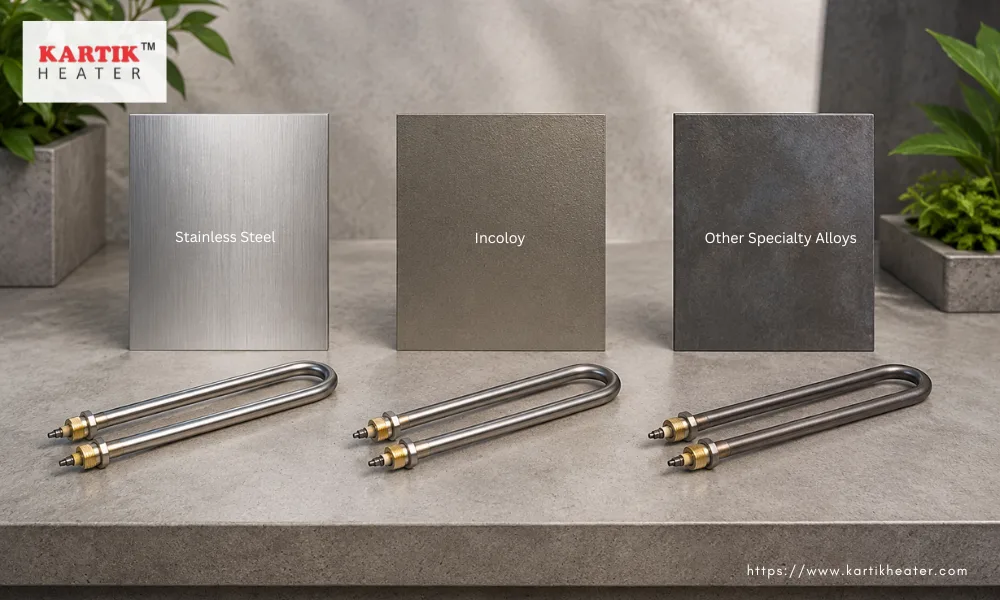
Selecting the right industrial heater materials is one of the most important decisions when designing or purchasing industrial heating equipment. The material used in a heating element directly affects performance, corrosion resistance, operating temperature, durability, and service life.
Whether you are specifying a tubular heater for air heating or an immersion heater for liquid heating, understanding material properties can help prevent premature failures and improve operational efficiency.
Industrial environments often expose heaters to moisture, chemicals, high temperatures, oils, and corrosive substances. This is why heater manufacturers carefully choose sheath materials based on application requirements rather than using a one-size-fits-all approach.
At Kartik Heater, material selection is an important part of designing reliable industrial heating solutions for machinery manufacturers, processing plants, OEMs, and industrial users. Tubular heaters and immersion heaters are manufactured using application-specific materials to ensure consistent performance and long service life.
What Are Industrial Heater Materials?
Industrial heater materials are the metals and insulation materials used to construct heating elements, sheaths, terminals, and protective components of industrial heaters.
The sheath material is particularly important because it directly contacts the heating medium and protects the internal resistance wire from environmental conditions.
Common industrial heating element materials include:
-
Stainless Steel 304
-
Stainless Steel 316
-
Incoloy 800
-
Incoloy 840
-
Copper
-
Mild Steel
-
Magnesium Oxide insulation
The correct material selection ensures:
-
Efficient heat transfer
-
Corrosion resistance
-
High-temperature capability
-
Mechanical strength
-
Extended heater lifespan
Why Is Heater Sheath Material Selection Important?
Heater sheath material selection determines how well a heater withstands temperature, moisture, chemicals, pressure, and corrosion during operation.
A poorly selected material can lead to:
-
Corrosion damage
-
Heater failure
-
Reduced efficiency
-
Increased maintenance costs
-
Production downtime
For example, a heater used in chemical processing may require Incoloy, while a water heating application may perform effectively with stainless steel.
How Industrial Heater Materials Affect Performance
The outer sheath of a heater serves several critical functions:
Heat Transfer
The sheath transfers heat from the resistance wire to the surrounding medium.
Corrosion Protection
Industrial processes often involve chemicals, moisture, and contaminants that can attack metal surfaces.
Mechanical Strength
Industrial heaters operate under vibration, pressure, and thermal cycling.
Temperature Resistance
Different materials can withstand different operating temperatures.
Choosing suitable industrial heater materials improves reliability and ensures consistent heating performance over time.
Stainless Steel Heater Elements
Stainless steel remains one of the most widely used materials in industrial heating applications.
Why Stainless Steel Is Popular
Stainless steel heater elements offer a balance between cost, durability, and corrosion resistance.
Common grades include:
Stainless Steel 304
Suitable for:
-
Water heating
-
Air heating
-
Food processing equipment
-
General industrial applications
Benefits:
-
Good corrosion resistance
-
Excellent durability
-
Cost-effective solution
-
Easy fabrication
Stainless Steel 316
Suitable for:
-
Marine environments
-
Chemical processing
-
Saltwater applications
-
Pharmaceutical industries
Benefits:
-
Superior corrosion resistance
-
Better chemical compatibility
-
Long service life in harsh environments
Many tubular heater sheath materials are manufactured using stainless steel because of its versatility and reliable performance.
Incoloy Heating Elements
When applications involve higher temperatures or more aggressive environments, Incoloy heating elements are often preferred.
What Is Incoloy?
Incoloy is a nickel-iron-chromium alloy designed to withstand:
-
High temperatures
-
Oxidation
-
Corrosive chemicals
-
Thermal stress
Common Grades
Incoloy 800
Widely used for:
-
High-temperature air heating
-
Process heating equipment
-
Furnace applications
Incoloy 840
Commonly selected for:
-
Continuous heating operations
-
Oxidizing environments
-
Industrial process heating
Benefits of Incoloy Heating Elements
-
Excellent oxidation resistance
-
Superior high-temperature performance
-
Longer operating life
-
Better resistance to thermal fatigue
For demanding industrial heating solutions, Incoloy often provides greater durability than standard stainless steel.
Stainless Steel vs Incoloy: Which Is Better?
The answer depends on the application.
Stainless Steel Is Better When:
-
Moderate temperatures are involved
-
Water heating applications are common
-
Budget considerations are important
-
Corrosion exposure is moderate
Incoloy Is Better When:
-
Operating temperatures are very high
-
Continuous-duty operation is required
-
Corrosive environments are present
-
Thermal cycling is frequent
The best choice depends on process conditions rather than simply selecting the most expensive material.
Tubular Heater Sheath Materials
Tubular heaters are among the most versatile industrial heaters available today.
Kartik Heater manufactures industrial tubular heaters for:
-
Industrial machinery
-
Air heating systems
-
Process heating systems
-
Surface heating
-
Water heating applications
The company offers customized designs, application-specific watt density, and tailored dimensional configurations for industrial users.
Common Tubular Heater Sheath Materials
Stainless Steel
Used for:
-
Air heating
-
Water heating
-
Food processing
-
General industrial machinery
Incoloy
Used for:
-
High-temperature applications
-
Corrosive environments
-
Continuous industrial operation
Why Material Selection Matters
Proper tubular heater sheath materials improve:
-
Heat transfer efficiency
-
Temperature stability
-
Corrosion resistance
-
Heater longevity
Immersion Heater Materials
Immersion heaters are designed to heat liquids directly and efficiently.
Common applications include:
-
Water heating
-
Oil heating
-
Chemical processing
-
Storage tanks
-
Industrial hot water systems
Kartik Heater manufactures immersion heaters for industrial liquid heating systems, including water immersion heaters and oil immersion heaters.
Common Immersion Heater Materials
Stainless Steel 304
Suitable for:
-
Clean water
-
Mild industrial fluids
Stainless Steel 316
Suitable for:
-
Corrosive liquids
-
Chemical applications
Incoloy
Suitable for:
-
High-temperature oils
-
Aggressive process fluids
-
Demanding industrial applications
According to Kartik Heater\'s oil immersion heater specifications, SS 304, SS 316, and Incoloy are commonly used element materials depending on the application.
Applications Across Industries
Different industries require different industrial heating element materials.
Chemical Processing
Requires:
-
Corrosion resistant heating elements
-
Chemical compatibility
-
High-temperature stability
Food Processing
Requires:
-
Hygienic materials
-
Stainless steel construction
-
Reliable temperature control
Plastic Processing
Requires:
-
High-temperature heater materials
-
Consistent heating performance
-
Long operational life
Water and Oil Heating
Requires:
-
Corrosion resistance
-
Efficient heat transfer
-
Application-specific material selection
Packaging and Manufacturing
Requires:
-
Durable tubular heaters
-
Reliable process heating equipment
-
Continuous-duty performance
Common Mistakes to Avoid
Selecting Materials Based Only on Cost
The lowest-cost material may not provide the required durability.
Ignoring Chemical Compatibility
Different chemicals attack different metals.
Overlooking Operating Temperature
Every material has temperature limitations.
Not Considering Corrosion Factors
Moisture, chemicals, and environmental exposure significantly affect heater life.
Using Generic Specifications
Custom material selection often improves performance and reduces maintenance costs.
Why Industries Prefer High-Quality Industrial Heater Materials
Industries increasingly focus on:
-
Reliability
-
Energy efficiency
-
Reduced downtime
-
Lower maintenance costs
-
Consistent process performance
Properly selected industrial heater materials help achieve these objectives by improving durability and maintaining stable heat output throughout the heater\'s service life.
This is especially important for critical process heating operations where equipment reliability directly affects production efficiency.
Why Choose Kartik Heater?
Kartik Heater has been serving industrial heating applications since 2010, providing reliable heating solutions for manufacturers and industrial users. The company manufactures tubular heaters, immersion heaters, and customized industrial heating products designed for continuous industrial operation.
Why industries choose Kartik Heater:
-
Industry experience and technical expertise
-
Customized heater manufacturing
-
Application-specific material selection
-
Consistent quality control
-
Reliable technical support
-
Industrial-grade performance
-
Customer-focused engineering approach
Conclusion
Understanding industrial heater materials is essential for selecting the right heating solution. Materials such as stainless steel and Incoloy each offer unique advantages depending on operating temperature, chemical exposure, and application requirements.
For tubular heaters and immersion heaters, proper material selection improves efficiency, durability, and overall process reliability. By evaluating corrosion resistance, temperature capability, and environmental conditions, industries can achieve better performance and longer equipment life while reducing maintenance and operational costs.