-min.png "kartikheater")
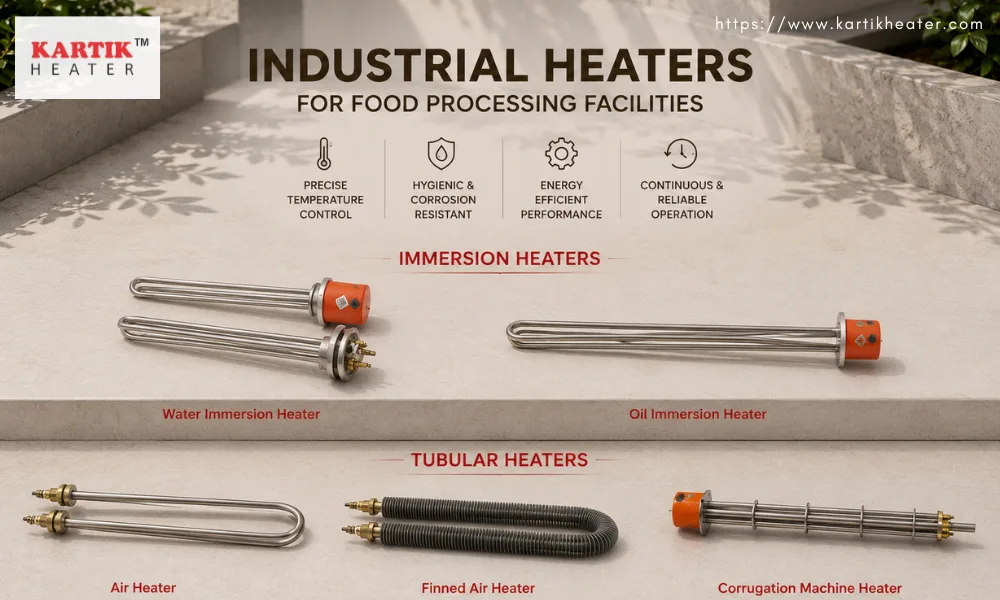
Food processing facilities rely on accurate and consistent heating to maintain product quality, production efficiency, and operational reliability. From cooking and drying to sterilization and cleaning, every stage of food manufacturing requires controlled temperatures to ensure uniform processing while supporting food safety standards.
Selecting the right industrial heaters for food processing is an important engineering decision because heating equipment directly affects process consistency, energy consumption, and equipment performance. Depending on the application, manufacturers commonly use an industrial air heater for heating moving air and an industrial immersion heater for heating liquids such as water, edible oils, cleaning solutions, and process fluids.
Modern food processing equipment is designed to operate continuously under demanding production conditions. Integrating reliable industrial heating systems helps maintain stable temperatures, improve production efficiency, and reduce unexpected downtime. Whether installing a process air heater in a drying system or an electric immersion heater in a storage tank, selecting application-specific heating equipment contributes to long-term operational performance.
What Are Industrial Heaters for Food Processing?
Industrial heaters for food processing are heating devices designed to provide controlled thermal energy for various manufacturing operations within food production facilities. These heaters support processes such as drying, baking, pasteurization, sterilization, preheating, cleaning, and temperature maintenance.
Two commonly used heating solutions include:
-
Industrial air heaters, which heat moving air for drying, curing, ovens, and ventilation systems.
-
Industrial immersion heaters, which heat liquids such as water, edible oils, syrups, and cleaning chemicals used during production.
By maintaining accurate temperatures throughout the manufacturing process, these heaters help improve product consistency while supporting efficient production operations.
Heating Requirements in Food Processing Facilities
Food manufacturing involves a wide range of products, each requiring specific temperature conditions. The heating system must deliver consistent performance while operating safely in environments where hygiene and reliability are essential.
Important heating requirements include:
Uniform Temperature Distribution
Even heat distribution helps maintain consistent product quality. Uneven temperatures may affect cooking, drying, moisture removal, or product texture.
Reliable Process Control
Modern industrial heating systems should respond accurately to process temperature requirements to minimize variations during production.
Hygienic Equipment Design
Heating equipment installed in food facilities should be compatible with hygienic manufacturing practices. Appropriate material selection helps withstand regular cleaning and washdown procedures.
Continuous Operation
Food production often operates around the clock. Heating equipment must provide dependable performance during continuous manufacturing schedules.
Energy Efficiency
Well-designed industrial process heaters improve heat transfer efficiency, helping reduce unnecessary energy consumption while maintaining production targets.
Applications of Air Heaters in Food Processing
An industrial air heater is widely used wherever heated airflow is required to support manufacturing processes. By transferring heat efficiently to moving air, these heaters contribute to consistent drying, baking, and temperature-controlled production.
Common applications include:
Drying Operations
Drying fruits, vegetables, spices, grains, and packaged products requires controlled airflow to remove moisture while maintaining product quality.
Baking and Food Ovens
An electric air heater provides uniform hot air circulation inside industrial baking systems, helping achieve consistent cooking results.
Packaging Lines
Heated air supports shrink packaging, sealing, labeling, and wrapping operations in many food processing facilities.
Air Handling Units
A process air heater is commonly installed within industrial air handling systems to maintain controlled temperatures throughout production areas.
Dehumidification Systems
Removing excess moisture from production environments helps maintain product quality and supports stable manufacturing conditions.
Applications of Immersion Heaters in Food Processing
An industrial immersion heater is designed to heat liquids directly by transferring heat through a metal sheath immersed in the process fluid. These heaters are commonly installed in tanks, vessels, and storage systems.
Typical applications include:
Water Heating
Hot water is required for food preparation, equipment cleaning, sanitation, and various production processes.
Edible Oil Heating
Maintaining the proper temperature of edible oils improves production efficiency in frying and cooking operations.
Cleaning Systems
An electric immersion heater heats cleaning solutions used for equipment sanitation, helping maintain hygienic production standards.
Ingredient Storage Tanks
Liquid ingredients such as syrups, sauces, and processing liquids often require temperature maintenance to preserve flow characteristics and product consistency.
CIP (Clean-in-Place) Systems
Many food processing facilities use heated cleaning solutions in CIP systems to support efficient equipment cleaning without extensive disassembly.
Key Features and Benefits
Selecting suitable industrial heating equipment offers several operational advantages for food manufacturers.
Accurate Temperature Control
Maintaining stable process temperatures helps improve product consistency across production batches.
Improved Production Efficiency
Reliable heating minimizes interruptions while supporting continuous manufacturing operations.
Better Heat Transfer
Modern industrial electric heaters are designed to deliver efficient heat transfer for air and liquid heating applications.
Flexible Installation
Heating solutions can be customized to suit production lines, storage tanks, air ducts, ovens, and specialized processing equipment.
Long-Term Reliability
Properly engineered heaters are designed for continuous industrial operation while reducing maintenance requirements.
How Industrial Heaters Improve Food Processing Performance
Heating equipment influences nearly every stage of food production. Well-designed heating systems help manufacturers improve efficiency while maintaining product quality and operational reliability.
Industrial heaters contribute to improved performance by:
-
Maintaining uniform process temperatures
-
Supporting continuous production schedules
-
Reducing temperature fluctuations
-
Improving product consistency
-
Increasing energy efficiency
-
Minimizing production downtime
-
Enhancing equipment reliability
For example, drying systems equipped with an air heater for industrial applications provide controlled airflow that helps achieve consistent moisture removal. Similarly, an industrial immersion heater maintains stable temperatures in ingredient storage tanks, ensuring process continuity throughout production.
Key Factors When Choosing Industrial Heaters
Selecting the right heating solution requires evaluating several engineering and operational factors.
Process Requirements
Determine whether the application requires heating air, liquids, oils, or process vessels before selecting the heater type.
Temperature Range
Operating temperatures influence heater design, sheath material selection, and power requirements.
Heating Medium
The characteristics of air, water, edible oils, or cleaning solutions affect heater selection and overall performance.
Material Compatibility
Choose materials compatible with food processing environments and cleaning procedures to support long-term reliability.
Installation Requirements
Available installation space, mounting arrangements, and electrical connections should be considered during equipment selection.
Manufacturer Expertise
Working with an experienced industrial heater manufacturer in Vapi helps ensure that the selected heating equipment meets application-specific performance requirements.
Common Mistakes to Avoid
Several common mistakes may reduce heating system performance in food manufacturing facilities.
Avoid:
-
Selecting heaters based only on purchase price
-
Ignoring production temperature requirements
-
Choosing unsuitable sheath materials
-
Incorrect heater sizing
-
Overlooking cleaning and sanitation requirements
-
Neglecting preventive maintenance
-
Installing standard heaters where customized solutions are more suitable
Careful application engineering and proper heater selection help improve reliability, production efficiency, and long-term operating performance.
Why Industries Prefer Industrial Heaters for Food Processing
Food manufacturers require heating systems that deliver consistent performance while supporting product quality, production efficiency, and operational reliability. As production volumes increase and food safety standards become more stringent, selecting dependable industrial heaters for food processing becomes an essential part of facility design.
Industries prefer modern industrial heating systems because they provide:
-
Consistent and accurate temperature control in food processing
-
Reliable operation during continuous production
-
Efficient heat transfer for air and liquid heating
-
Improved product consistency across production batches
-
Flexible installation for different types of food processing equipment
-
Lower maintenance when properly engineered
-
Compatibility with automated production systems
-
Customization for specific process requirements
Whether installed as an industrial air heater for drying applications or an industrial immersion heater for heating process liquids, the right heating solution helps maintain stable manufacturing conditions while supporting operational efficiency.
Why Choose Kartik Heater?
Choosing a reliable heating equipment manufacturer is just as important as selecting the appropriate heater. Kartik Heater manufactures industrial heating solutions designed to meet the diverse requirements of food processing facilities and other industrial sectors.
With years of manufacturing experience, Kartik Heater understands that every production process has unique operating conditions. The company offers customized heating solutions based on process temperature, installation requirements, operating environment, and application-specific performance needs.
Kartik Heater offers:
-
Expertise in manufacturing industrial air heaters and industrial immersion heaters
-
High-quality raw materials and precision manufacturing
-
Custom-designed heating solutions for specialized applications
-
Technical guidance for product selection
-
Reliable manufacturing processes and quality inspection
-
Consistent product performance
-
Timely delivery for OEMs and industrial customers
-
Customer-focused engineering support
Businesses looking for an air heater manufacturer in Vapi, an industrial heater manufacturer in Vapi, or an immersion heater manufacturer in India can benefit from application-focused solutions that support reliable industrial heating performance. Contact Kartik Heater now.
Conclusion
Efficient heating is fundamental to modern food manufacturing. From drying and baking to liquid heating and sanitation, properly selected industrial heaters for food processing help maintain consistent temperatures, improve production efficiency, and support reliable plant operations.
An industrial air heater is well suited for applications involving heated airflow, while an industrial immersion heater provides efficient heating for water, edible oils, cleaning solutions, and other process liquids. Selecting the appropriate heater depends on operating temperature, heating medium, installation conditions, and production requirements.
Partnering with an experienced manufacturer ensures that heating equipment is engineered to meet the specific demands of food processing environments. Companies seeking dependable industrial heating equipment in Vapi, Gujarat, and across India can benefit from working with manufacturers that combine technical expertise, quality manufacturing, and customer-focused support.