-min.png "kartikheater")
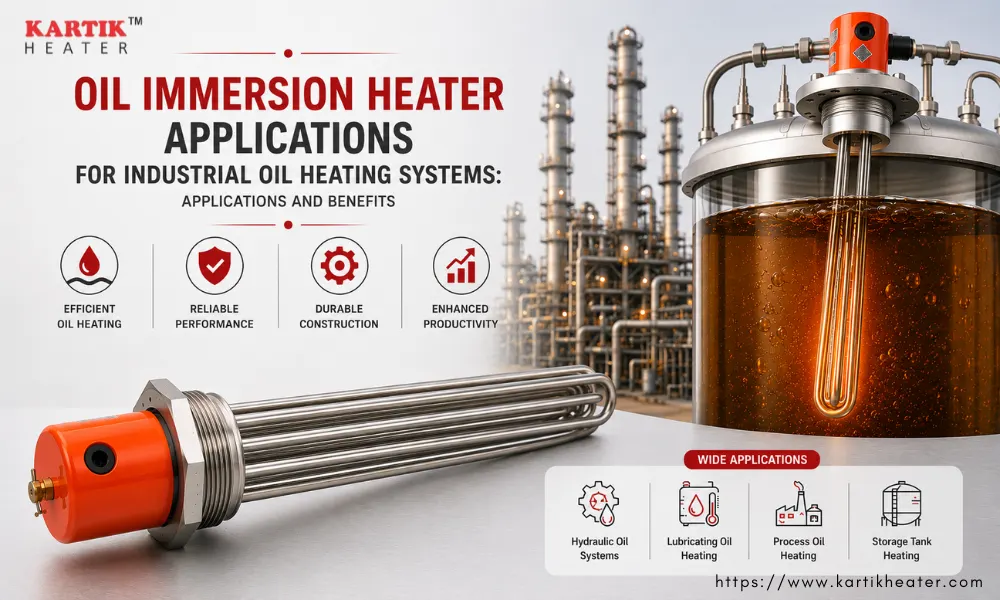
Industrial oil heating systems play a critical role in maintaining consistent production temperatures across manufacturing processes. Whether the requirement is heating lubricating oil, thermal oil, heavy fuel oil, edible oil, or other industrial fluids, selecting the right heating solution directly affects operational efficiency, energy consumption, and equipment reliability.
Among the available heating technologies, Oil immersion heaters have become a preferred choice for industrial heating applications because they provide direct heat transfer, precise temperature control, and reliable performance across a wide range of industrial environments.
As industries continue to prioritize energy efficiency and process consistency, manufacturers increasingly rely on high-quality industrial oil immersion heaters designed to meet demanding operating conditions. Companies such as Kartik Industrial Heater Pvt. Ltd. manufacture customized oil immersion heating solutions suitable for various industrial oil heating requirements across India.
What are Oil Immersion Heater Applications?
An oil immersion heater is an electric heating element that is directly immersed inside oil to transfer heat efficiently. Unlike indirect heating methods, the heating element comes into direct contact with the liquid, enabling faster and more uniform heat distribution.
Oil immersion heaters are widely used for:
-
Industrial process heating
-
Storage tank heating
-
Lube oil heating
-
Hydraulic oil heating
-
Fuel oil preheating
-
Thermal oil circulation systems
-
Chemical process tanks
The heater typically consists of stainless steel or Incoloy tubular heating elements mounted on a flange or threaded fitting. When electricity passes through the resistance element, heat is generated and transferred directly into the oil.
This design minimizes heat loss while improving heat transfer efficiency and maintaining excellent temperature uniformity, making it suitable for continuous industrial operations.
Key Features and Benefits of Oil Immersion Heaters
Selecting the right industrial oil heater is not only about reaching the desired temperature but also about ensuring reliable long-term operation, reduced maintenance, and consistent production quality.
High Heat Transfer Efficiency
Direct immersion allows heat to move efficiently from the heating element into the oil with minimal energy loss.
Benefits include:
-
Faster heating cycles
-
Lower energy wastage
-
Improved production efficiency
-
Reduced operating costs over time
Uniform Temperature Distribution
Industrial processes often require stable temperatures throughout the entire tank or vessel.
A properly designed oil immersion heater for industrial tanks helps maintain:
-
Consistent oil viscosity
-
Uniform product quality
-
Reduced thermal gradients
-
Better process stability
Temperature uniformity is particularly important for industries handling lubricants, edible oils, specialty chemicals, and thermal fluids.
Wide Operating Temperature Range
Different industrial oils require different heating conditions depending on their viscosity and application.
The recommended operating temperature should always be selected according to:
-
Oil type
-
Flash point
-
Process requirements
-
Tank design
-
Flow conditions
Using the appropriate operating temperature helps improve equipment life while preventing overheating or oil degradation.
Reliable Industrial Performance
Industrial environments demand equipment capable of operating continuously with minimal downtime.
Modern industrial oil immersion heaters are designed for:
-
Continuous-duty applications
-
High mechanical strength
-
Corrosion resistance
-
Easy installation
-
Low maintenance requirements
Depending on the application, materials such as SS 304, SS 316, SS 321, or Incoloy may be selected to suit different process conditions.
Compatibility with Automation Systems
Many industrial oil heating systems are integrated with:
-
Temperature controllers
-
Thermocouples
-
RTDs
-
Digital control panels
-
PLC-based automation systems
This enables accurate process control while improving safety and production consistency.
How Oil Immersion Heaters Improve Industrial Performance
Efficient heating directly influences production quality, equipment lifespan, and operating costs.
Improved Process Stability
Maintaining stable oil temperatures helps industrial equipment perform consistently throughout production cycles.
Examples include:
-
Hydraulic systems operating at optimal viscosity
-
Thermal oil circulation systems delivering consistent heat
-
Lubrication systems functioning efficiently
-
Storage tanks maintaining desired fluid characteristics
Stable temperatures also reduce unnecessary production interruptions caused by fluctuating process conditions.
Reduced Energy Consumption
Because heat is generated directly inside the oil, less energy is lost compared to external heating methods.
Improved heat transfer efficiency contributes to:
-
Lower electricity consumption
-
Faster startup times
-
Reduced thermal losses
-
Better overall system efficiency
Longer Equipment Life
Properly designed heating systems help minimize excessive thermal stress on pumps, valves, pipelines, and storage tanks.
Maintaining recommended operating temperatures can reduce wear caused by oil thickening, oxidation, or uneven heating.
Support for Industrial Standards
Industrial heating equipment should be manufactured following applicable engineering practices and relevant IS standards, material specifications, and electrical safety requirements. Compliance with recognized standards helps improve reliability, installation safety, and long-term operational performance.
Applications of Oil Immersion Heaters Across Industries
The versatility of oil immersion heater applications makes them suitable for a wide range of industries where controlled oil heating is essential for process efficiency, product quality, and equipment protection.
Chemical and Process Industries
Chemical plants often require precise heating for process oils, specialty fluids, and thermal media. An industrial oil immersion heater provides controlled heating while maintaining process stability.
Common uses include:
-
Reactor vessel heating
-
Heat transfer oil systems
-
Chemical storage tanks
-
Intermediate fluid heating
Consistent temperatures help maintain product quality and improve process efficiency.
Food and Edible Oil Processing
Food processing facilities use oil heating systems for:
-
Edible oil storage
-
Vegetable oil heating
-
Process tank heating
-
Temperature maintenance systems
An oil immersion heater for industrial tanks offers uniform heating, helping maintain product consistency while avoiding localized overheating.
Power Plants and Heavy Industries
Large industrial facilities use oil heaters for:
-
Turbine lube oil heating
-
Fuel oil preheating
-
Hydraulic oil systems
-
Transformer oil heating
Proper lube oil heating ensures correct oil viscosity, improving equipment performance and reducing wear.
Oil and Gas Sector
The oil and gas industry often requires reliable heating systems for:
-
Heavy oil handling
-
Fuel oil storage
-
Tank heating
-
Pipeline systems
An oil tank immersion heater can help maintain fluid flow properties and prevent viscosity-related issues.
Textile, Paper, and Manufacturing Industries
Many manufacturing plants use oil heating systems in:
-
Heat transfer systems
-
Process machinery
-
Drying equipment
-
Industrial process heating applications
Maintaining consistent oil temperatures contributes to stable production and improved energy efficiency.
Storage Tank Heating Applications
Storage tank heating is one of the most common uses of industrial immersion heaters.
Industries use storage tank heating for:
-
Fuel oil tanks
-
Lubrication systems
-
Thermal oil reservoirs
-
Process oil tanks
Maintaining the desired temperature helps prevent oil thickening and supports smooth system operation.
Factors to Consider Before Selecting an Oil Immersion Heater
Choosing the right heater requires evaluating both process and equipment requirements.
Oil Type
Different oils have different thermal properties.
Consider:
-
Viscosity
-
Flash point
-
Thermal conductivity
-
Operating temperature range
Selecting the correct heater design helps improve safety and heating performance.
Required Operating Temperature
The heater should be designed according to:
-
Process temperature
-
Ambient conditions
-
Heating time requirements
-
Tank capacity
Improper heater selection may reduce efficiency or affect oil quality.
Heater Material
Material selection depends on:
-
Oil compatibility
-
Temperature range
-
Corrosion conditions
Common sheath materials include:
-
SS 304
-
SS 316
-
SS 321
-
Incoloy
The correct material improves durability and service life.
Watt Density
Watt density refers to the amount of heat generated per unit surface area.
Lower watt density helps:
-
Prevent oil degradation
-
Improve heater life
-
Reduce carbon formation
This is particularly important for high-viscosity oils.
Safety and Standards
Industrial heating systems should comply with applicable IS standards, electrical safety practices, and process-specific requirements.
Additional protection systems may include:
-
Thermostats
-
Temperature sensors
-
Safety cut-outs
-
Control panels
These features support safe and reliable operation.
Common Mistakes to Avoid
Selecting an oil heater without evaluating process conditions can result in reduced performance and increased maintenance.
Choosing Incorrect Watt Density
Excessive watt density may:
-
Overheat oil
-
Cause carbon deposits
-
Reduce heater life
Ignoring Temperature Control
Lack of proper temperature monitoring can lead to:
-
Product quality issues
-
Increased energy consumption
-
Process instability
Selecting the Wrong Material
Using unsuitable materials may increase corrosion risks and reduce equipment reliability.
Oversizing or Undersizing the Heater
Incorrect sizing can result in:
-
Slow heating
-
Higher energy costs
-
Uneven temperatures
A properly engineered heating system improves long-term performance.
Why Industries Prefer Oil Immersion Heater Applications
Industries continue to prefer oil immersion heater applications because they provide:
-
High heat transfer efficiency
-
Excellent temperature uniformity
-
Fast heating response
-
Low maintenance requirements
-
Long service life
-
Compatibility with automated systems
-
Flexible installation options
These advantages make immersion heaters suitable for both small process tanks and large industrial oil heating systems.
Why Choose Kartik Industrial Heater Pvt. Ltd.?
Kartik Heater is an experienced manufacturer of industrial heating solutions serving customers across India.
The company offers:
-
Custom-designed oil immersion heaters
-
High-quality materials and manufacturing practices
-
Solutions for industrial oil heating systems
-
Technical support for heater selection
-
Reliable supply for OEMs and industries
-
Consistent product performance
As an industrial immersion heater supplier in India, Kartik Industrial Heater Pvt. Ltd. supports industries in Vapi, Sarigam, Pardi, Udvada, Umargam, Valsad, Daman, Silvassa, and across Gujarat and India with heating solutions designed for diverse industrial applications.
Conclusion
The growing demand for energy-efficient and reliable heating systems has increased the importance of oil immersion heater applications across industries. Whether used for industrial process heating, lube oil heating, or storage tank heating, a well-designed industrial oil immersion heater provides high heat transfer efficiency, temperature uniformity, and dependable performance.
For industries seeking customized heating solutions, working with an experienced oil immersion heater manufacturer in Vapi, such as Kartik Industrial Heater Pvt. Ltd., can help ensure the right heater selection for long-term operational efficiency.
Contact Kartik Heater now!