-min.png "kartikheater")
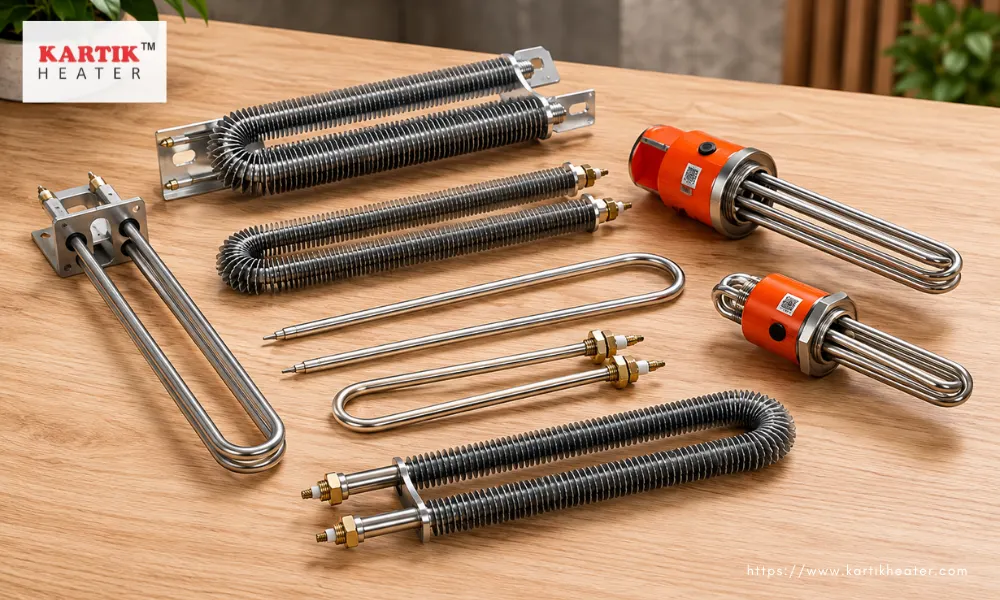
Industrial heating plays a critical role in manufacturing, processing, packaging, chemical production, pharmaceuticals, and countless other sectors. Whether heating air, water, oil, chemicals, or metal surfaces, selecting the right heater directly impacts efficiency, equipment life, and production quality. One of the most important yet often overlooked factors in heater selection is watt density in industrial heaters.
Many businesses focus on heater wattage, temperature requirements, or physical dimensions while overlooking heater watt density. However, the watt density of a heating element can significantly affect heat transfer, energy consumption, maintenance requirements, and overall system performance.
Understanding watt density calculation and choosing the appropriate watt density for an application helps improve reliability, optimize operating costs, and enhance industrial process efficiency. Whether you are selecting an electric industrial heater for air heating, liquid heating, or process equipment, watt density should be a key consideration.
What Is Watt Density?
Watt density refers to the amount of power generated per unit area of a heating element surface. It is commonly expressed in watts per square inch (W/in²) or watts per square centimeter (W/cm²).
In simple terms, watt density indicates how intensely a heater produces heat from its surface.
Watt Density Formula
The basic watt density calculation is:
Watt Density = Total Wattage ÷ Heated Surface Area
For example, if a heating element produces 2000 watts and has a surface area of 100 square inches, the watt density would be:
2000 ÷ 100 = 20 W/in²
This means every square inch of the heating element surface generates 20 watts of heat.
The correct watt density depends on the medium being heated, operating temperature, heat transfer conditions, and application requirements.
Why Watt Density Matters in Industrial Heaters
Selecting the proper industrial heater watt density is crucial because it directly affects heat transfer and heater longevity.
A heater with an inappropriate watt density may cause:
-
Premature heater failure
-
Product degradation
-
Reduced energy efficiency
-
Temperature inconsistencies
-
Increased maintenance costs
-
Equipment downtime
When properly selected, watt density contributes to improved industrial heating efficiency and better process control.
Low Watt Density vs High Watt Density Heater
Different industrial applications require different watt density levels.
Low Watt Density Heater
A low watt density heater generates heat over a larger surface area. Because heat is distributed more evenly, the heater operates at a lower sheath temperature.
Advantages of Low Watt Density
-
Longer heater life
-
Reduced risk of overheating
-
Better suitability for temperature-sensitive materials
-
Improved safety
-
Lower maintenance requirements
Typical Applications
Low watt density heaters are commonly used for:
-
Water heating
-
Oil heating
-
Chemical solutions
-
Food processing
-
Pharmaceutical applications
In these applications, excessive surface temperatures can damage the medium being heated.
High Watt Density Heater
A high watt density heater concentrates more heat into a smaller surface area.
This allows the heater to achieve higher temperatures more quickly.
Advantages of High Watt Density
-
Faster heat-up times
-
Compact heater design
-
High-temperature operation
-
Increased heating capacity
Typical Applications
High watt density heaters are often used in:
-
Metal processing
-
Air heating systems
-
Industrial ovens
-
Mold heating
-
High-temperature manufacturing processes
However, careful design is required to prevent overheating and premature element failure.
The Relationship Between Watt Density and Heater Life
One of the most significant factors affecting heater longevity is heating element watt density.
As watt density increases, the sheath temperature of the heater also rises. Higher sheath temperatures accelerate wear on heating elements and insulation materials.
Excessive temperatures can lead to:
-
Oxidation
-
Scale formation
-
Thermal stress
-
Reduced insulation resistance
Conversely, properly selected watt density allows heaters to operate within safe temperature limits, extending service life and reducing maintenance costs.
For this reason, many industries prioritize lower watt density designs whenever space and process conditions permit.
Watt Density and Industrial Temperature Control
Accurate industrial temperature control is essential for maintaining product quality and process consistency.
Watt density directly influences how quickly heat is transferred into the medium.
A heater with excessively high watt density may create localized hot spots, resulting in uneven heating. This can affect:
-
Product quality
-
Material properties
-
Process repeatability
-
Equipment performance
Optimized watt density helps maintain stable temperatures throughout the process, ensuring better production outcomes.
How Watt Density Impacts Energy Efficiency
Modern manufacturers continually seek ways to improve industrial heating efficiency while reducing operating costs.
Contrary to common assumptions, higher watt density does not always mean higher efficiency.
In many applications, excessively high watt density causes unnecessary heat concentration and temperature spikes. This can increase energy losses and reduce overall system effectiveness.
Proper watt density selection enables:
-
More efficient heat transfer
-
Reduced energy consumption
-
Improved process control
-
Lower operating expenses
As a result, many companies invest in energy efficient industrial heaters specifically designed with optimized watt density levels.
Watt Density in Different Industrial Heating Systems
Different industrial heating systems require different watt density ranges based on their operating conditions.
Air Heating Applications
Air is a poor conductor of heat compared to liquids. Therefore, air heating systems often require higher watt density than liquid heating applications.
Examples include:
-
Duct heaters
-
Air heaters
-
Finned heaters
-
Drying systems
Proper airflow is critical to prevent overheating.
Liquid Heating Applications
Liquids generally provide better heat transfer than air.
Applications include:
-
Water heating
-
Oil heating
-
Chemical processing
-
Tank heating
These systems typically use lower watt density to prevent fluid degradation and improve heater life.
Process Heating Applications
Many industrial process heating systems involve specialized operating conditions requiring customized watt density calculations.
Process engineers must consider:
-
Fluid properties
-
Flow rates
-
Temperature requirements
-
Installation conditions
-
Surface temperature limitations
This is why custom-designed heaters are often preferred for critical industrial processes.
The Role of Custom Industrial Heaters
Every industrial process has unique heating requirements. A standard heater may not always provide the ideal watt density for a specific application.
This is where custom industrial heaters become valuable.
Customized heaters can be designed according to:
-
Required watt density
-
Operating temperature
-
Available installation space
-
Process conditions
-
Power requirements
A properly engineered custom solution improves performance, reliability, and energy efficiency while reducing the risk of heater failure.
Why Watt Density Matters for Process Heating Solutions
Modern process heating solutions depend on accurate temperature control and efficient heat transfer.
Watt density affects nearly every aspect of process performance, including:
-
Heat-up time
-
Temperature stability
-
Energy consumption
-
Equipment reliability
-
Product quality
Whether heating air, water, oil, chemicals, or industrial equipment, selecting the correct watt density helps ensure consistent and dependable operation.
For industries seeking reliable industrial heating solutions, understanding watt density is not just a technical detail,it is a critical factor in achieving long-term operational success.
Conclusion
Understanding watt density in industrial heaters is essential for selecting the right heating solution for any industrial application. From heater life and energy efficiency to temperature control and process reliability, watt density influences overall system performance in significant ways.
By carefully evaluating heater watt density, businesses can improve industrial heating efficiency, reduce maintenance costs, and enhance production quality. Whether choosing a standard heater or investing in custom industrial heaters, proper watt density selection plays a vital role in achieving reliable and cost-effective industrial process heating.