-min.png "kartikheater")
Industrial heaters are essential components in manufacturing, processing, packaging, chemical production, food processing, pharmaceuticals, and many other industries. They provide the controlled heat necessary for maintaining process efficiency, product quality, and operational reliability.
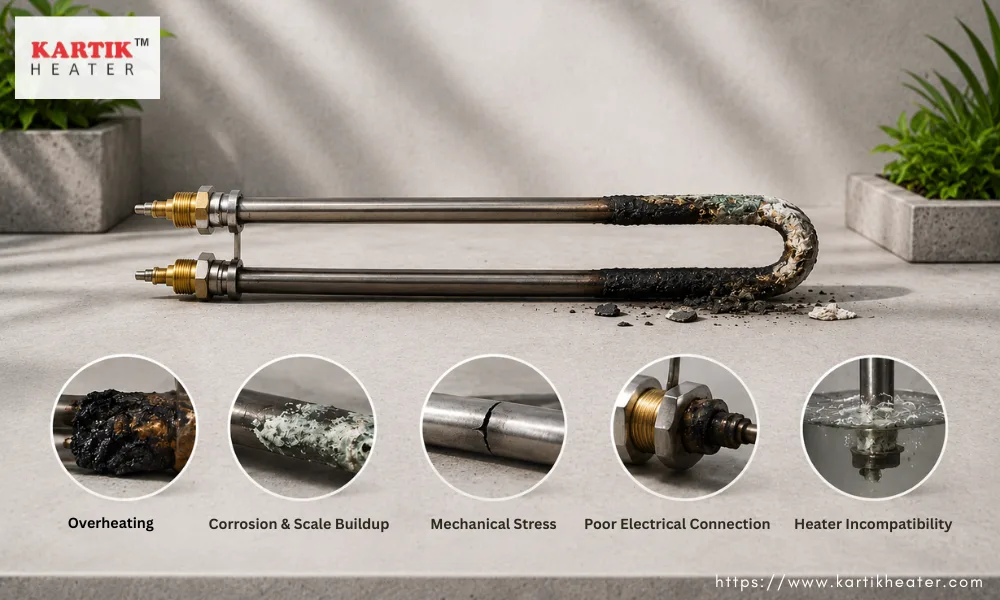
However, even the most robust heating systems can experience industrial heater failure if they are improperly selected, installed, operated, or maintained. A failed heater can lead to costly downtime, production losses, inconsistent product quality, and increased maintenance expenses.
Understanding the common causes of industrial heater failure and implementing effective preventive measures can significantly improve equipment reliability and extend service life. Whether you use tubular heaters, immersion heaters, strip heaters, or other industrial heating systems, proactive maintenance and troubleshooting play a critical role in preventing unexpected breakdowns.
What Is Industrial Heater Failure?
Industrial heater failure refers to the inability of a heating element or heating system to perform its intended heating function safely and efficiently.
Failure may occur suddenly or gradually due to electrical, mechanical, thermal, or environmental factors.
Common Signs of Heater Failure
-
Reduced heating efficiency
-
Uneven temperature distribution
-
Slow heat-up times
-
Frequent temperature fluctuations
-
Visible damage to heating elements
-
Unexpected equipment shutdowns
-
Increased energy consumption
Identifying these warning signs early can help prevent major operational disruptions.
Why Does Industrial Heater Failure Matter?
Industrial heater failure affects production efficiency, increases maintenance costs, and can compromise product quality. In critical industrial processes, even a short period of downtime may result in significant financial losses and delayed production schedules.
In industries such as plastic processing, food manufacturing, pharmaceuticals, and chemical processing, heating systems must operate continuously under demanding conditions. Reliable performance is essential for maintaining process stability and meeting quality standards.
Common Causes of Industrial Heater Failure
1. Overheating Industrial Heaters
One of the most frequent causes of heater breakdown is excessive operating temperature.
When heaters operate beyond their designed temperature range, the heating element experiences accelerated wear and thermal stress.
Common reasons include:
-
Poor temperature control
-
Inadequate airflow
-
Insufficient liquid coverage in immersion applications
-
Incorrect watt density selection
-
Blocked heat dissipation
Prevention Tip
Use properly calibrated thermocouples, temperature sensors, and control systems to prevent overheating industrial heaters.
2. Heater Element Failure Due to Thermal Cycling
Heating elements repeatedly expand and contract as they heat up and cool down.
Over time, this process can cause:
-
Metal fatigue
-
Cracking
-
Resistance wire damage
-
Terminal failure
This type of heater element failure is common in applications with frequent start-stop cycles.
Prevention Tip
Select heating elements designed for the operating environment and minimize unnecessary temperature fluctuations where possible.
3. Moisture Ingress
Industrial environments often expose heaters to humidity, water, steam, and washdown conditions.
Moisture can:
-
Reduce insulation resistance
-
Cause electrical leakage
-
Create short circuits
-
Accelerate corrosion
Tubular heaters and immersion heaters operating in damp environments require proper sealing and protection.
Prevention Tip
Regularly inspect insulation resistance and replace damaged seals or terminal covers.
4. Corrosion and Chemical Exposure
Chemical processing environments can be particularly demanding on heating elements.
Corrosion can weaken:
-
Heater sheaths
-
Electrical connections
-
Protective coatings
Over time, corrosion reduces heater performance and increases the likelihood of failure.
Prevention Tip
Select sheath materials that are compatible with the operating environment, such as stainless steel or Incoloy for corrosive applications.
5. Incorrect Heater Selection
Not all industrial heaters are designed for every application.
Using the wrong heater can result in:
-
Excessive watt density
-
Inadequate temperature capability
-
Poor heat transfer
-
Premature wear
Prevention Tip
Work with an experienced supplier to ensure proper heater sizing and application-specific design.
6. Voltage Fluctuations and Electrical Problems
Industrial facilities occasionally experience unstable power conditions.
Voltage fluctuations may lead to:
-
Excessive current draw
-
Element overheating
-
Insulation breakdown
-
Reduced equipment life
Prevention Tip
Monitor power quality and ensure electrical systems meet equipment specifications.
Industrial Heater Troubleshooting: Where Should You Start?
The first step in industrial heater troubleshooting is identifying whether the problem is electrical, thermal, mechanical, or environmental.
Basic Troubleshooting Checklist
Check:
-
Power supply voltage
-
Electrical connections
-
Resistance values
-
Insulation resistance
-
Temperature sensor operation
-
Controller settings
-
Visible physical damage
A structured troubleshooting process helps reduce downtime and unnecessary component replacement.
How Industrial Heater Maintenance Prevents Failures
Why Maintenance Matters
Effective industrial heater maintenance is one of the most cost-effective ways to improve reliability and reduce unplanned downtime.
Maintenance Best Practices
Perform regular inspections for:
-
Electrical connections
-
Corrosion
-
Scale buildup
-
Mechanical damage
-
Sensor calibration
Monitor:
-
Operating temperatures
-
Current draw
-
Insulation resistance
-
Heater performance trends
Routine industrial heating equipment maintenance often identifies developing issues before they become major failures.
How Industrial Heater Maintenance Improves Industrial Performance
Preventive maintenance delivers measurable operational benefits.
Improved Process Stability
Consistent heating improves:
-
Product quality
-
Process repeatability
-
Temperature control
Reduced Downtime
Scheduled maintenance reduces emergency repairs and production interruptions.
Lower Operating Costs
Efficient heaters consume less energy and require fewer replacements.
Extended Equipment Life
Proper maintenance contributes to a longer industrial heater lifespan, improving return on investment.
Applications Across Industries
Industrial heaters are used across numerous sectors where reliable temperature control is critical.
Chemical Processing
Maintains process temperatures for reactors, tanks, and pipelines.
Plastic Processing
Supports extrusion, injection molding, and blow molding operations.
Food Processing
Provides controlled heating for cooking, drying, and packaging systems.
Pharmaceutical Manufacturing
Ensures precise thermal conditions for sterilization and production processes.
Oil and Gas
Supports fluid heating and process control applications.
Across these industries, preventing industrial heater failure helps maintain productivity and operational efficiency.
Factors to Consider Before Selecting an Industrial Heater
Choosing the right heater can significantly reduce failure risks.
Consider:
Operating Temperature
Select heaters rated for expected process temperatures.
Environmental Conditions
Evaluate exposure to:
-
Moisture
-
Chemicals
-
Dust
-
Vibration
Watt Density
Proper watt density reduces overheating and improves heat transfer.
Material Compatibility
Sheath materials should be compatible with the heated medium and operating environment.
Control Systems
Integrate reliable sensors, controllers, and safety devices.
Common Mistakes That Lead to Industrial Heater Failure
Many failures can be traced to avoidable operational issues.
Ignoring Preventive Maintenance
Waiting for equipment to fail before servicing often increases costs.
Using Incorrect Watt Density
Excessive watt density can accelerate heater element failure.
Poor Installation Practices
Improper mounting, wiring, or positioning can reduce performance.
Neglecting Environmental Factors
Moisture, corrosion, and contamination significantly impact heater reliability.
Delayed Troubleshooting
Ignoring early warning signs often results in more extensive damage.
Why Industries Prefer Reliable Industrial Heating Solutions
Modern manufacturing operations require dependable heating systems that deliver consistent performance.
Industries prefer proven industrial heating solutions because they provide:
-
Stable process temperatures
-
Improved product quality
-
Reduced downtime
-
Better energy efficiency
-
Lower maintenance costs
-
Longer equipment life
When properly maintained, industrial heaters can provide years of reliable service under demanding operating conditions.
Why Choose Kartik Heater?
As an industrial heater manufacturer in India, Kartik Heater focuses on delivering reliable heating solutions for a wide range of industrial applications.
What Sets Kartik Heater Apart?
-
Industry experience and technical expertise
-
High-quality manufacturing standards
-
Custom heater design capabilities
-
Reliable product performance
-
Technical support and application guidance
-
Consistent supply and service
-
Customer-focused engineering approach
Kartik Heater manufactures industrial heating products designed to support efficient and dependable industrial operations.
Conclusion
Industrial heater failure can have significant consequences for productivity, product quality, and operating costs. Fortunately, many failures are preventable through proper heater selection, routine maintenance, regular inspections, and proactive troubleshooting.
By understanding the common causes of industrial heater failure, including overheating, corrosion, moisture ingress, thermal cycling, and electrical issues, industrial facilities can improve equipment reliability and extend service life.
Investing in preventive maintenance and choosing dependable industrial heating solutions helps ensure long-term operational success while reducing unexpected downtime and maintenance expenses.